
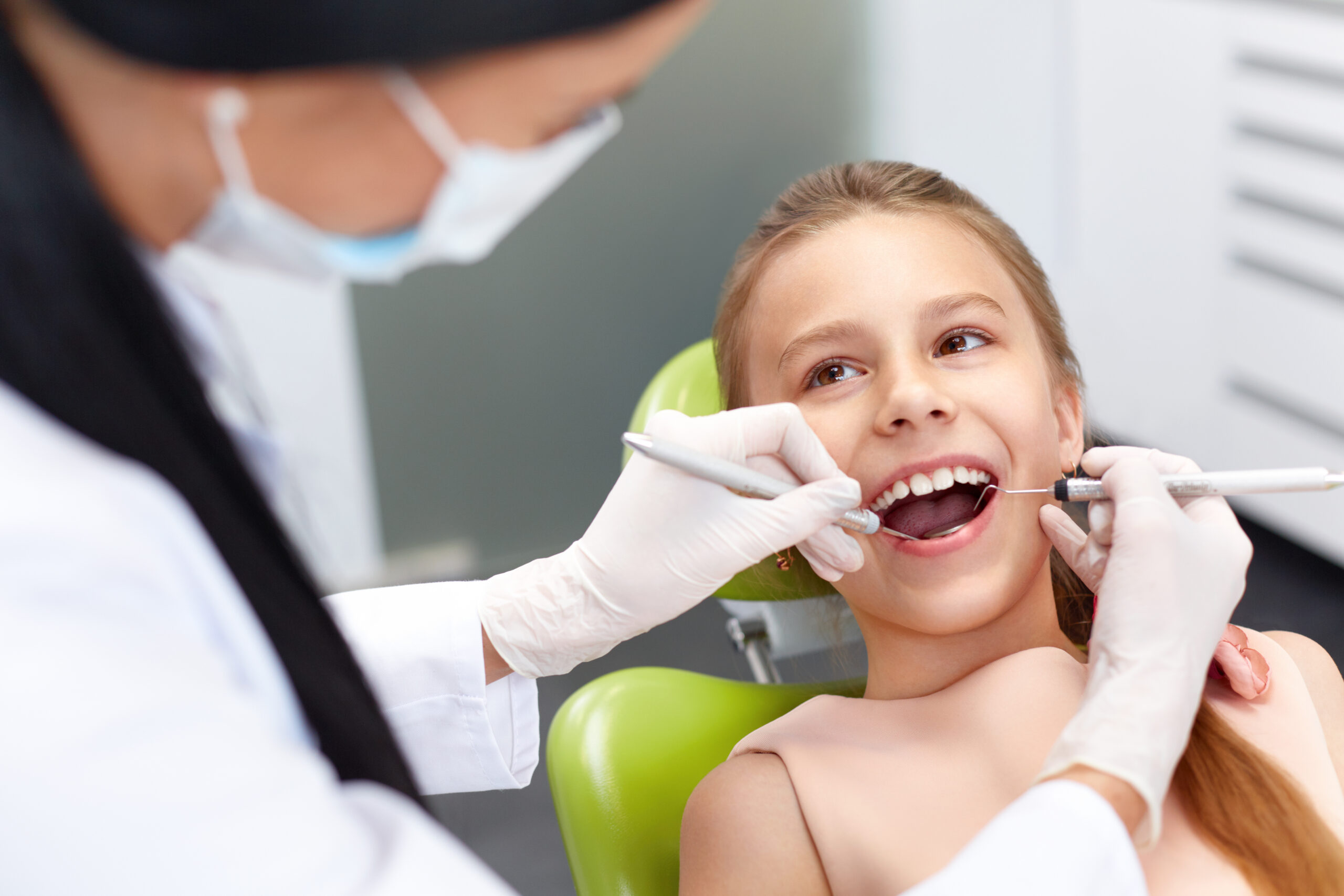

Losing a tooth early can feel like a big moment for a child and an even bigger question for a parent. When a baby tooth comes out ahead of schedule, whether from decay, an accident, or an extraction, the space it leaves behind does not just sit empty and wait. Nearby teeth can drift into that gap, and that drift can affect how permanent teeth come in later.
That is where a space maintainer comes in. At Guadalupe Kids Dental, we use these small devices to hold open the spot where a tooth used to be, giving the permanent tooth underneath room to grow in where it belongs. Board certified pediatric dentist Dr. Kristopher Bennion completed his pediatric residency at Children’s Hospital of Philadelphia and the University of Pennsylvania, and he uses that training to help Seguin area families understand exactly when a space maintainer makes sense for their child.
Why Baby Teeth Matter More Than Parents Expect
Baby teeth do more than help a child chew and speak. They act as placeholders, holding the correct amount of space in the jaw until the permanent tooth is ready to erupt. When a baby tooth falls out at the right time, on its own, that transition tends to go smoothly.
Problems can show up when a tooth is lost too soon. The American Academy of Pediatric Dentistry’s guidance on developing dentition notes that early loss of a primary tooth can allow neighboring teeth to shift, which may lead to crowding, delayed eruption, or a permanent tooth coming in at the wrong angle. A routine pediatric dental exam can catch these changes early, before they turn into a bigger orthodontic concern down the road.
When Does a Child Need a Space Maintainer
Not every lost tooth calls for a space maintainer. If a child loses a front tooth close to when it was already going to fall out naturally, there is usually little risk of the surrounding teeth shifting. The bigger concern comes with early loss of the back teeth, the molars, since permanent teeth are not scheduled to replace them for several more years.
Common Reasons a Molar Is Lost Early
A molar might need to come out well before its natural timeline for a few different reasons. We look at each child’s situation individually to decide whether a space maintainer is the right next step after a pediatric extraction.

Questions About Your Child's Dental Health? test
Dr. Kit Bennion is here to help.
- Untreated decay: A cavity that has progressed too far to save with a filling may mean the tooth has to be removed.
- Accidental injury: A fall or sports collision can damage a molar badly enough that extraction is the safest option.
- Crowding in the jaw: Some children lose a molar early as part of a broader plan to manage limited space in the mouth.
Whatever the reason behind the loss, the goal afterward stays the same: protect the space so the permanent tooth has a clear, correctly sized path to come in.
What to Expect From the Space Maintainer Process
Fitting a space maintainer is a straightforward, comfortable visit for most children. We take a mold of the area, and the appliance is custom made to fit snugly around the neighboring teeth. Some space maintainers are fixed in place with a small band and wire, while others are removable, depending on where the gap is and how a child’s mouth is developing.
Once it is in place, a space maintainer generally causes little to no discomfort. Children can eat, brush, and talk normally within a day or two of adjusting to the new appliance. We check the fit at regular visits, since growing mouths change quickly, and the maintainer stays in until the permanent tooth is ready to take its place.
Helping Your Child Adjust at Home
A new appliance in the mouth can feel strange to a child at first, even when it does not hurt. Reassurance and a bit of patience during the first week goes a long way. Soft foods for the first day or two, along with gentle brushing around the appliance, help kids settle into the new normal quickly.
Parents often ask about follow up care, including how the appliance connects to a child’s broader oral health routine, from fluoride treatments to regular checkups. Keeping up with pediatric x-rays during this stretch helps us track exactly how close the permanent tooth is to erupting, so the space maintainer comes out at the right time, not too early and not too late.
Schedule a Space Maintainer Evaluation With Guadalupe Kids Dental
If your child has lost a tooth earlier than expected, a quick evaluation can settle the question of whether a space maintainer is needed. Dr. Bennion brings specialized training in the treatment and management of pediatric patients, including those with special healthcare needs, and our team takes the time to walk every family through what comes next in plain, reassuring language. We are in network with most major insurance providers, including TMHP Medicaid, so cost does not have to stand in the way of protecting your child’s smile.
Families throughout Seguin, New Braunfels, Gonzales, and the surrounding communities count on us for care that treats every child like our own. If you have noticed a gap where a baby tooth used to be, reach out through our online scheduling form and we will help you find the right next step.