


If the thought of your child getting dental X-rays gives you pause, you are not alone. Many parents walk into their child’s first dental appointment full of questions about whether X-rays are truly necessary, how often they should happen, and whether the radiation exposure is something to worry about. The answers may surprise you in the best possible way.
At Guadalupe Kids Dental, we believe informed parents are empowered parents, and we take great pride in helping families feel confident about their child’s care. Dr. Kit Bennion is a board-certified pediatric dentist who emphasizes prevention and education at every visit, and pediatric X-rays are one of the most important tools we have for keeping kids’ smiles healthy long before a problem becomes visible to the naked eye.
Are Dental X-Rays Safe for Children?
This is the question we hear most often from parents, and the answer is a reassuring yes. Dental X-rays for children use an extremely low dose of radiation, far lower than what children encounter during everyday activities like playing outside or taking a flight. The American Academy of Pediatric Dentistry’s best practices for prescribing dental radiographs provide detailed guidance on timing, frequency, and safety protocols, and pediatric dental offices are held to strict standards to minimize exposure at every visit.
How We Keep Radiation Exposure Low
At Guadalupe Kids Dental, we follow the ALARA principle, which stands for “as low as reasonably achievable.” This means we only take X-rays when there is a clear clinical indication, and we use modern digital imaging technology, which significantly reduces radiation exposure compared to traditional film X-rays. Lead aprons and thyroid collars are used to protect your child during the process. The safety measures in place are thorough, and every decision about when to take X-rays is guided by your child’s individual needs rather than a one-size-fits-all schedule.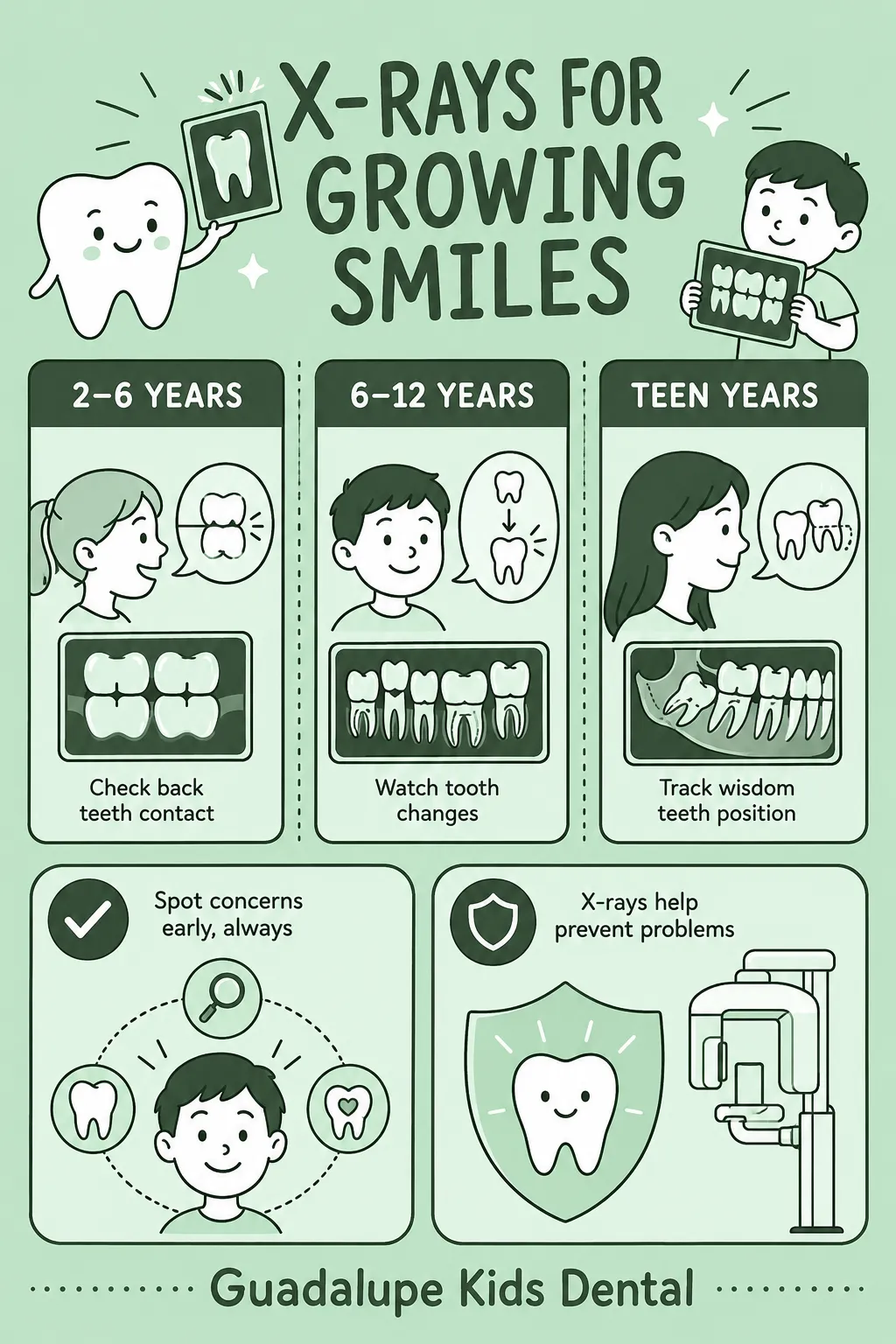
Why Dental X-Rays Matter for Kids
Children’s mouths change quickly, and much of that growth happens beneath the surface. A visual exam can show what is happening on the outside, but X-rays help Dr. Kit see the areas that are harder to evaluate. They can reveal cavities forming between the teeth, show how permanent teeth are developing behind baby teeth, and help identify concerns with the roots, bone, or jaw before they become more serious. Without X-rays, small problems can quietly grow between visits, which may make treatment more involved than it would have been if the issue had been caught earlier.

Questions About Your Child's Dental Health? test
Dr. Kit Bennion is here to help.
What X-Rays Reveal That a Visual Exam Cannot
Baby teeth matter more than many parents realize. They hold space for permanent teeth and play a critical role in your child’s ability to chew, speak, and develop properly. Our prevention-focused approach means we use every tool available, including X-rays, to protect those teeth and give permanent ones the best possible start. Catching a cavity between two baby molars on an X-ray, for example, allows us to treat it conservatively before it reaches the nerve or affects the neighboring tooth.
How Often Does My Child Need X-Rays?
The frequency of dental X-rays depends on your child’s individual risk factors, including their age, history of cavities, oral hygiene habits, and diet. Children at higher risk for cavities may need X-rays every six months, while those at lower risk may need them less frequently. This is one of the many reasons a thorough pediatric dental exam and cleaning is so valuable. It gives Dr. Kit the information he needs to make the right recommendation for your specific child rather than applying a generic schedule to every patient.
Here is a general overview of X-ray needs at different stages of childhood:
- Young children (ages 2 to 6): Bitewing x-rays are typically recommended once back teeth begin to touch, as cavities can develop between teeth that the toothbrush cannot reach.
- School-age children (ages 6 to 12): X-rays help monitor the transition from baby to permanent teeth and catch developmental concerns early.
- Teens: As all permanent teeth come in, periodic x-rays monitor development, wisdom-tooth positioning, and any emerging concerns.
Every child is different, and Dr. Kit will always discuss his recommendations with you before any X-rays are taken.
Questions About X-Rays? Guadalupe Kids Dental Has Answers
At Guadalupe Kids Dental, we know a trip to the dentist comes with questions, and we genuinely welcome every one of them. Dr. Kit Bennion is a board-certified pediatric dentist who completed his residency at the Children’s Hospital of Philadelphia and the University of Pennsylvania, bringing a high level of training and experience to every child he sees. His background includes extensive work with medically complex and special-needs patients, and that same thoroughness and care carry over into every routine visit, including x-rays.
Your child’s dental care should feel clear, comfortable, and easy to understand from the start. Our team takes the time to explain each step, including when x-rays may be recommended and how they help us protect your child’s growing smile. Check out our new patient information to get started, and schedule an appointment today so we can start protecting your child’s smile from the inside out.