

A knocked-out tooth is one of the most alarming moments a parent can face, and knowing how to respond in those first few seconds can make a real difference in what happens next. Dental trauma in children is more common than most parents realize, and falls, sports accidents, and playground mishaps can happen without warning. The good news is that with fast action and the right care, many outcomes are much better than parents fear in the heat of the moment.
At Guadalupe Kids Dental in Seguin, Texas, Dr. Kristopher “Kit” Bennion and the team are equipped to handle dental emergencies with the calm, child-centered approach families in the area depend on. As a board-certified pediatric dentist, Dr. Bennion understands both the clinical side of dental trauma and the very human reality of a scared child and a worried parent, and the practice is ready to help when it matters most.
Does It Matter Whether the Tooth Is a Baby Tooth or a Permanent Tooth?
Yes, and the answer shapes everything about how the situation is handled. According to research published by the National Institutes of Health, traumatic dental injuries are a worldwide occurrence in young children, happening most often as kids explore and become more physically active. The way a dental team responds depends heavily on whether the tooth that came out was a primary (baby) tooth or a permanent tooth.
For baby teeth, the priority is protecting the developing permanent tooth underneath. Replanting a primary tooth is generally not recommended, as it can interfere with the permanent tooth still forming below the gumline. For permanent teeth, time is a critical factor, and getting to a pediatric emergency dentist as quickly as possible improves the chances of a favorable outcome significantly.
What to Do Right Away
Staying calm is one of the most helpful things you can do, because your child is watching your reaction and will take cues from you. The first step is to assess the situation: Is your child in pain? Is there significant bleeding? Did a tooth fully come out or just get loosened?
Next, figure out whether the tooth is a baby tooth or a permanent tooth, because the right steps are very different. Baby front teeth usually loosen and fall out naturally around ages 6 to 7, and permanent front teeth typically come in between about ages 6 and 8. If your child is younger than about 6, a knocked-out front tooth is almost always a baby tooth. If you are not sure, handle it as if it were a permanent tooth and call us right away.
Step-by-Step Care for a Knocked-Out Permanent Tooth
A permanent tooth that is knocked out can sometimes be saved, but the cells on the root begin to die quickly once the tooth is out of the mouth and drying. The following steps reflect guidance from the American Association of Endodontists and the International Association of Dental Traumatology.
Pick the tooth up by the crown. Touch only the white chewing part of the tooth, never the root. The root surface holds the living cells that help the tooth reattach.
Rinse only if it is dirty. If the tooth has dirt on it, rinse it gently with water for a few seconds. Do not scrub it, use soap, dry it, or wrap it in a tissue or cloth.
Try to put it back in the socket. If your child is calm enough to cooperate, gently place the tooth back into the socket facing the right way, then have your child hold it in place by biting softly on clean gauze or a cloth.
If you cannot replant it, keep it moist. Place the tooth in a small container of milk or an emergency tooth preservation kit if you have one. Do not store it in tap water. Young children should not hold the tooth in their mouth, since they could swallow it.
Get to a dentist fast. Try to have your child seen within 30 minutes of the injury, and bring the tooth with you. A tooth may still be saved after a longer time, so come in even if more time has passed.
If the Knocked-Out Tooth Is a Baby Tooth
Do not try to put a baby tooth back in. Dental trauma guidelines advise against replanting primary teeth because the tooth can damage the permanent tooth that is still forming in the jawbone just above or below it. Instead, keep your child calm, manage any bleeding by having them bite gently on clean gauze, use a cold compress on the outside of the lip or cheek for swelling, and call us right away for guidance.
A dental visit is still important after a baby tooth is knocked out. We check the gums, the nearby teeth, and the area where the permanent tooth is developing, and follow-up visits let us watch for changes as your child grows. Our dental emergencies blog has additional information on recognizing when a situation requires urgent care, and our guide to first aid for broken or chipped teeth covers injuries where the tooth stays in place but is damaged.
How We Treat Dental Trauma at Guadalupe Kids Dental

Questions About Your Child's Dental Health? test
Dr. Kit Bennion is here to help.
When you arrive at our office after a dental injury, our team’s first focus is making your child feel safe. We know children who are frightened or in pain need reassurance before they can cooperate with treatment, and our approach reflects that from the moment you walk in.
Dr. Bennion will assess the injury, take any necessary X-rays, and discuss the appropriate next steps with you clearly and without unnecessary alarm. For permanent teeth that have been knocked out and brought in promptly, there may be options for replantation and stabilization. For primary teeth, treatment focuses on monitoring the area and protecting the permanent tooth below. You can learn more about Dr. Bennion’s training and approach on the meet the doctor page.
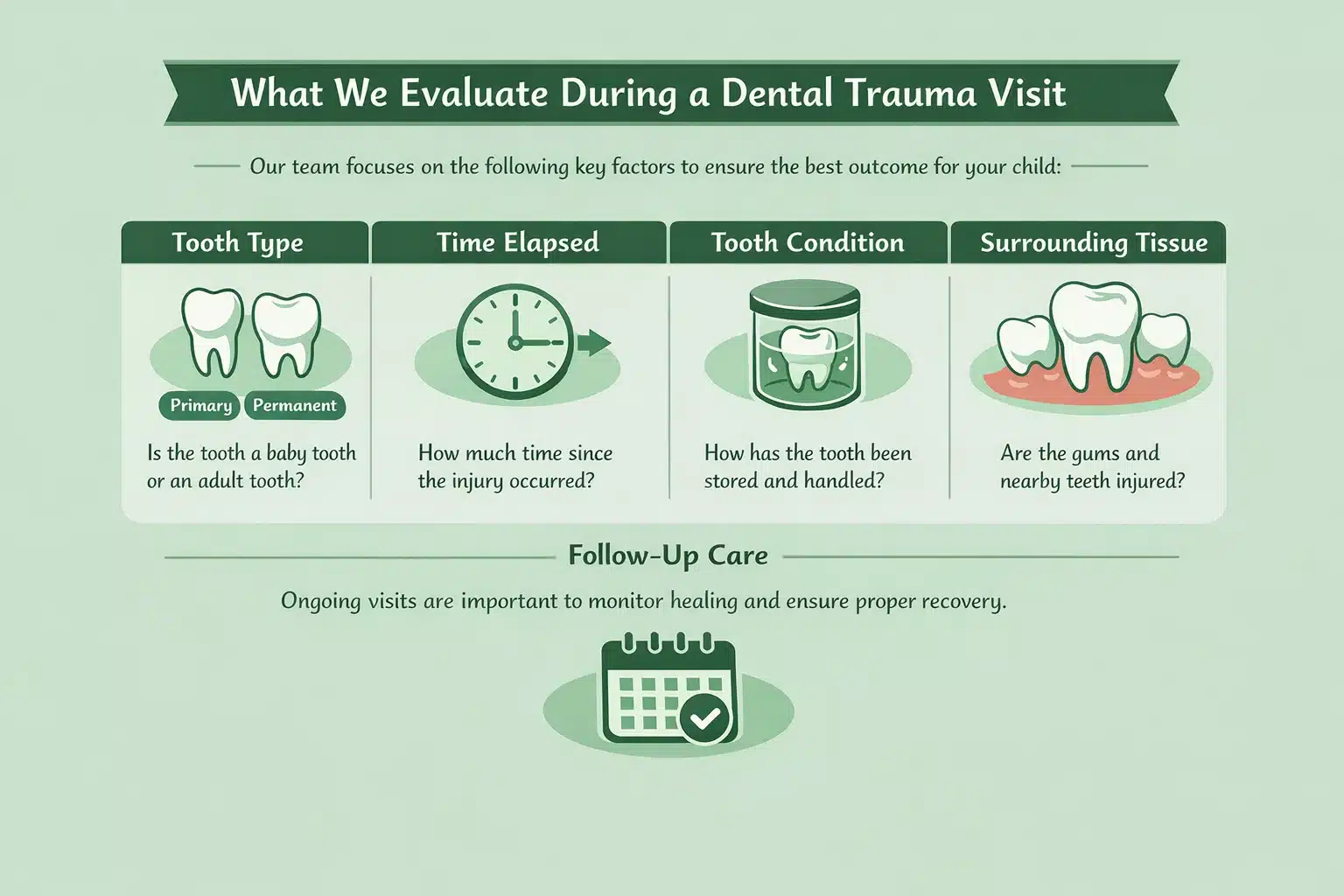
The following are some of the key things our team evaluates during a dental trauma visit to give your child the best possible outcome:
- Tooth type: Whether the injured tooth is a primary or permanent tooth determines the treatment approach entirely.
- Time elapsed: For permanent teeth, the sooner we see your child, the better the prognosis.
- Condition of the tooth: Where the tooth has been stored and how it has been handled since the injury matters for replantation cases.
- Surrounding tissue: We examine the gums, jaw, and nearby teeth for any additional injuries that may not be immediately obvious.
After the initial visit, follow-up appointments allow us to monitor healing and make sure the area is responding well. Consistent follow-up is one of the most important parts of recovery after dental trauma.
Visit Guadalupe Kids Dental for Your Child’s Knocked Out Tooth
Dental emergencies with children are stressful, but having a trusted pediatric dental home makes all the difference. At Guadalupe Kids Dental, we work with most major insurance providers, including TMHP (Medicaid), and offer flexible payment options so that financial concerns don’t stand in the way of getting your child the care they need. We encourage all Seguin-area families to get familiar with our office before an emergency arises, and our new patients page is a great place to start.
If your child has experienced a dental injury or you want to establish care with a board-certified pediatric dentist who is ready when emergencies happen, we are here for your family. Schedule an appointment today and let us be your first call when it counts.
Frequently Asked Questions About a Knocked-Out Tooth
What should I do first if my child knocks out a tooth?
Stay calm, since your child takes cues from you. Assess whether there is pain or significant bleeding and whether the tooth came out fully. Then contact the office right away for guidance.
How should I handle a knocked-out permanent tooth?
Pick it up by the crown only, never the root. If it is dirty, rinse it briefly with water without scrubbing. Gently place it back in the socket if you can and have your child bite on gauze, or keep it in milk if you cannot. Then get to a dentist right away, ideally within 30 minutes.
Should a knocked-out baby tooth be put back in?
No. Replanting a baby tooth is generally not recommended because it can interfere with the permanent tooth forming underneath. Keep your child calm, manage bleeding with gentle pressure, and call for guidance.
Why does time matter so much for a permanent tooth?
The living cells on the root of a permanent tooth begin to die once the tooth is out of the mouth and drying. Replanting the tooth quickly or keeping it moist in milk, and being seen by a dentist within about 30 minutes, gives the tooth the best chance of being saved.
How can families prepare for a dental emergency?
Getting familiar with a pediatric dental home before an emergency happens makes a stressful moment easier. Knowing where to go and who to call saves valuable time.
How can I tell if a knocked-out tooth is a baby tooth or a permanent tooth?
Age is the best clue. Permanent front teeth usually come in between about ages 6 and 8, so in younger children a knocked-out front tooth is almost always a baby tooth. If you are not sure, treat it as a permanent tooth, keep it moist in milk, and call the dentist right away.
The Guadalupe Kids Dental Team
Guadalupe Kids Dental, Seguin, TX